
Architectural Planters for Integrated and Modern Outdoor Spaces
What Are Architectural Planters?
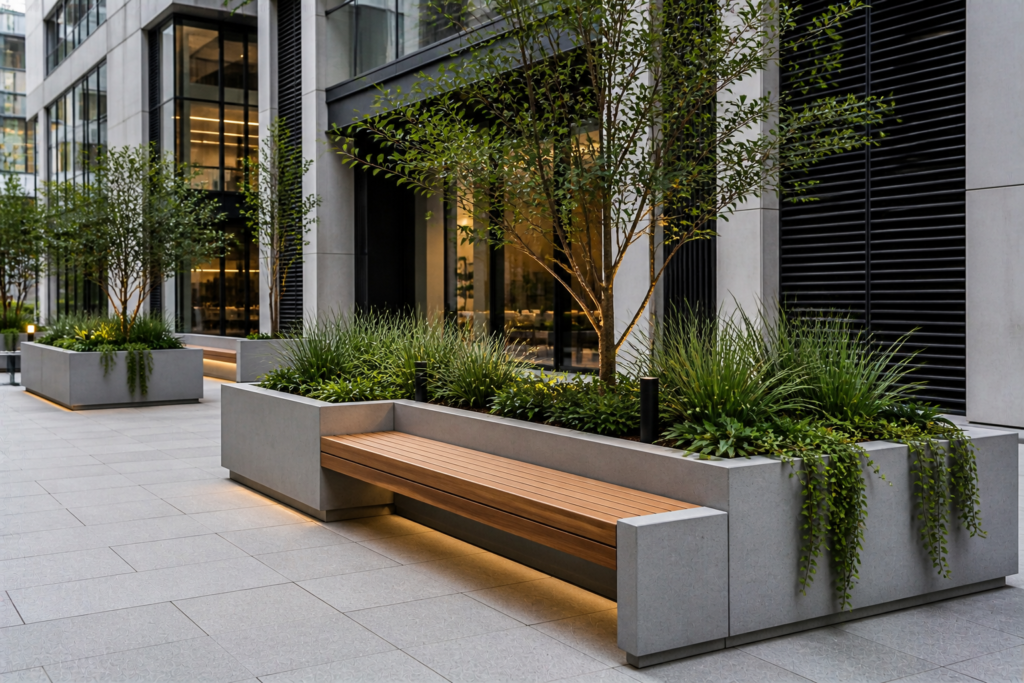
Architectural planters are outdoor containers specifically designed to complement and integrate with building architecture. They are often used as part of a broader design concept, aligning with structural elements, materials, and spatial layouts.
Unlike standard planters, architectural planters are typically specified by architects and designers to enhance both functionality and visual cohesion.
Why Choose Architectural Planters?
Architectural planters are valued for their ability to seamlessly blend into built environments. They are not just decorative elements but are designed to work as part of the overall structure.
They help create cohesive, well-planned outdoor spaces that align with modern architectural design.
Integrated and Functional Design
Architectural planters are designed with both form and function in mind. Key features include:
- Integration with building materials and finishes
- Clean, geometric shapes
- Custom sizing to fit specific spaces
- Multi-functional use (e.g., seating, barriers, space division)
These elements allow them to become a structural part of the environment.
Versatile Material Options
Architectural planters are available in materials that match modern construction and design standards. Common materials include:
- Concrete for structural strength
- Metal for a sleek and contemporary look
- Fiberglass for lightweight flexibility
- Composite materials for custom finishes
These materials ensure both durability and design consistency.
Ideal Applications for Planters
Planters are commonly used in:
- Commercial buildings and office developments
- Urban streets and public spaces
- Transport hubs and infrastructure projects
- Rooftop gardens and terraces
- High-end residential developments
They are particularly effective in projects where design integration is essential.
Enhancing Spatial Design
Planters help shape and organize outdoor spaces. They can:
- Define walkways and zones
- Create natural barriers
- Integrate greenery into built environments
- Enhance the visual flow of a space
Their role goes beyond planting, contributing to overall spatial planning.
Durable and Long-Lasting
Planters are built using high-quality materials to ensure long-term performance. They are designed to withstand outdoor conditions while maintaining their structural and visual integrity.
Supporting Modern Urban Design
Planters play an important role in modern urban design by introducing greenery into built environments. They contribute to more sustainable and visually appealing cities.
Conclusion
Planters provide a functional, durable, and design-led solution for outdoor spaces. Their ability to integrate with architecture makes them ideal for modern landscaping and urban development projects.